Something is happening on BookTok right now, and if you've spent any time in romance corners of the internet this month, you've probably caught the edge of it.
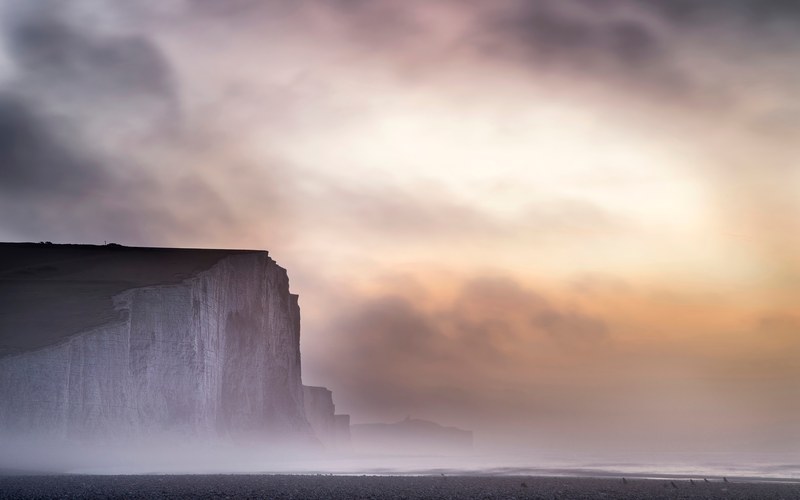
The images are all water. Sirens breaking the surface, ships in fog, harbors at dawn, the particular green of deep ocean. The caption templates are about drowning, tides, what lives below. Kalie Cassidy's Siren Mage duology — In the Veins of the Drowning and In the Wake of the Ruined, the second released July 7 — is being anointed the next big thing by creators who were right about the last few next big things. The aesthetic is spreading.
Maritime romance is having a moment. And it's worth looking at why, and where it's going, because the wave is just starting.
What is maritime romance?
Maritime romance is any romance novel where the sea is genuinely load-bearing — where the ocean or a body of water isn't just a backdrop, but shapes the characters' lives, the stakes, and the story. This can mean ships on open water, pirate captains, siren lore, harbor towns where the docks are the economy and the secrets move with the tide, coastal communities where the fishing season determines whether this winter is survivable, or any version of human life built around and dependent on water.
It's a wide lane. And it has been, for a long time, a quieter one.
Romance set in courts and academies has dominated fantasy for several years. Romance set in small towns and cities has anchored contemporary. Historical has largely meant London drawing rooms, Scottish highlands, or American frontier. The sea has always been there — tucked into the pirate romance category, the occasional seafaring historical — but it hasn't been named, hasn't been the thing people are actively searching for.
That's changing.
Why the sea works as a romance setting
Water is elemental in a way that other settings aren't. Readers who have never been on a ship and never will be still understand something about the sea at a gut level: its scale, its indifference, the way it offers passage and refuses to guarantee anything. You can project onto a court or a small town. The sea you can't quite domesticate.
For romance, this creates particular advantages.
Stakes have weight. A hero who controls a harbor controls everything that moves through it — not because of a magical power system, but because that's how harbors work. A heroine who needs to get a ship out before the tide turns is facing a real clock. The sea provides consequence without requiring an invented threat, and after years of dark lords and magical antagonists that can feel somewhat arbitrary, consequence that makes physical sense hits differently.
Place becomes atmosphere. The best romance writing makes the setting do emotional work — the fog that thickens when the characters are hiding something, the tide that turns at exactly the wrong moment, the way fog on the harbor at dawn feels like a held breath. Water is one of the oldest atmospheric tools available, and in romance it can carry yearning, dread, and intimacy simultaneously.
Isolation is natural. A ship at sea, a harbor town cut off by weather, a dock at midnight — maritime settings create the forced proximity that romance depends on without any of the contrivance. The characters are there because that is where they have to be, and the sea is the reason they can't easily leave.
Two kinds of maritime romance
Right now the maritime wave is running in two directions at once, and they're distinct enough to be worth separating if you're trying to find your next read.
Siren fantasy and romantasy at sea
This is where the BookTok energy is concentrated this month. The Siren Mage duology is the flagship, but it's not alone — sea-set fantasy romance has been building quietly for a couple of years, and the aesthetic has clicked into place this summer. The hallmarks: magic tied to water, sirens or sea creatures as characters or threats, oceanic mythology, the particular dread of drowning as a romantic metaphor, heroes who are dangerous the way deep water is dangerous.
If this is your lane, In the Veins of the Drowning is the entry point the BookTok algorithm is serving right now. Song of Silver, Flame Like Night by Amélie Wen Zhao uses different mythology but has a similar aesthetic sensibility. For the pirate fantasy crossover — ships and magic and morally questionable captains — Rosamund Hodge's work and Hannah Whitten's For the Wolf (which leans more forest, but the same dark-fantasy-romance sensibility) have built loyal readerships on adjacent appeal.
Historical and human maritime romance
This is the less-crowded shelf, and it's where I'd point any reader who loves the sea aesthetic but doesn't need the magic to generate the stakes.
The historical maritime lane covers anything from the Regency period through the Victorian age where ships, harbors, trade routes, smuggling, or naval service shape the story. The great advantage here is that the stakes are already there, baked in by history. Piracy was a hanging offense. Smuggling was a hanging offense. Naval service meant years at sea with no guarantee of return. The docks were where fortunes moved and criminals operated and customs officers made dangerous enemies.
The best of what's already out there:
The Windflower by Laura London (Sharon and Tom Curtis, writing together under a pseudonym) — a 1984 Regency pirate romance that has never really gone out of print because readers who find it keep pressing it on other readers. A captured heroine, a privateer captain with more layers than he shows, the Atlantic in the Age of Sail. The writing is genuinely good. The emotional arc earns its length.
To Capture a Rogue by Sarah Maclean — part of her Hell's Belles series, it includes the sea as a structural element. Maclean's historical work does the emotional legwork the best historical romance has always done, and the maritime thread is real.
Bet Me by Jennifer Crusie doesn't go to sea, but I mention it here as a calibration point: readers who love precise, character-driven historicals with real stakes tend to find their way to the same pool of recommendations, and Crusie's sense of consequence is exactly what maritime historical does at its best.
For the pirate angle specifically: Charlotte Featherstone's work, Susan Carroll's The Dark Queen series (which leans historical thriller with romantic elements, but has period maritime atmosphere in spades), and the deep backlist of Dorothy Dunnett for readers willing to commit to something epic.
The romantasy reader looking for the historical version
Here's the specific reader I want to talk to: you've been scrolling the siren aesthetic on BookTok, you're intrigued by the maritime wave, but you're also quietly tired of the same fantasy template (invented world, magical power system, chosen heroine, the usual). You want the atmosphere — the water, the tide, the sense of something moving under the surface — but you want it to be real.
Historical maritime romance is exactly that.
The stakes that make siren fantasy feel urgent (power, survival, who controls what moves through the water) are the same stakes that drove harbor towns in the 1830s. The smuggler who runs a criminal operation through a foggy harbor is dangerous in the same way the sea captain with a dark past is dangerous — the threat is specific, the consequences are real, the romantic tension comes from two people whose positions require them to be adversaries figuring out that they're not quite able to be.
No magic required. The harbor is enough.
Where to start if you're new to the maritime lane
If you want the fantasy version, start with In the Veins of the Drowning — it's the one the algorithm is serving and the community is reading together, which means there are people to talk about it with right now.
If you want the historical version, The Windflower is the foundational text. It's long and it earns the length. For something shorter and more recent, look for historical romances that use harbor or port settings in the premise description — it's a narrower search term than it should be, but "smuggler romance historical" and "harbor romance historical fiction" will start surfacing the right books.
If you want something set specifically in an 1832 harbor, where the fog comes in early and the ledgers don't quite add up and the customs officer has more to lose than she knows — The Smuggler's Ledger is the book I wrote for exactly that reader. The sea is always present. The harbor keeps its secrets the way water does: not by hiding them, but by making them too cold and deep to reach.
The reading list
Fantasy maritime:
- In the Veins of the Drowning by Kalie Cassidy (The Siren Mage #1)
- In the Wake of the Ruined by Kalie Cassidy (The Siren Mage #2)
- Song of Silver, Flame Like Night by Amélie Wen Zhao
- The Prisoner's Throne by Holly Black (sea elements in a fae world)
Historical pirate and seafaring:
- The Windflower by Laura London (Sharon and Tom Curtis)
- Captain's Fury by Jim Butcher — not romance-first, but for crossover readers
- Historical backlist: Patrick O'Brian's Master and Commander adjacent for the period atmosphere
Harbor and coastal historical romance:
- The Smuggler's Ledger by Remy Fontaine — 1832 harbor, customs officer heroine, morally gray smuggler hero, slow burn
- The Devil's Delilah by Loretta Chase — Regency, not sea-set, but the same sense of two intelligent people in over their heads
- Historical romantic suspense with coastal settings: Simone St. James for the gothic harbor feel in a more modern period
The maritime tide is rising. The readers who find the right book in this lane tend to find it their lane — the combination of immersive place, real stakes, and the particular romance of something dangerous and elemental underneath a beautiful surface doesn't let go easily.
The sea has always been there. It's just getting louder.
If you found a sea-set romance that belongs on this list, I want to know. Reply to this week's newsletter or find me at remyfontaine.com — I'm building a longer version of this list and reader recommendations are doing most of the work.