If you've read the last year of gothic romance discourse, you know what moors gothic is. Windswept estates. Heather and fog. A hero with a past that the landscape seems to embody. A heroine who arrives somewhere remote and immediately understands that secrets live in the walls.
You've probably read about the gothic revival that the 2026 Wuthering Heights film accelerated. You may have read my own piece on what to read when that film sends you back online asking where to find the feeling in a book.
Here's what that conversation hasn't quite named yet: the harbor is a gothic setting too. A different one. One that does everything the moors do — moral complexity, slow-burn danger, a world that shapes the couple before either of them speaks — but with a different set of rules and a different kind of threat.
I've been calling it harbor gothic. I want to explain what that means and why it matters, partly because I write it and partly because the readers who want it haven't had a label to search.
What Is Harbor Gothic?
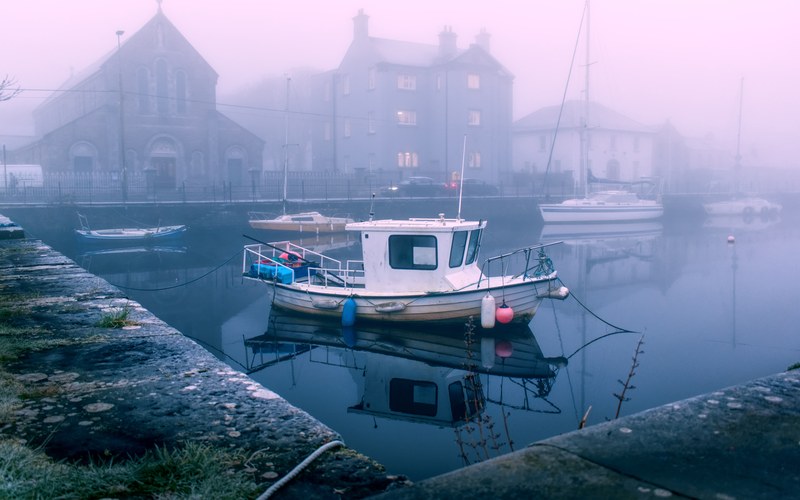
Harbor gothic is atmospheric romance set in a working port: a place defined by cargo, customs, trade, and the continuous negotiation between what's legal and what's profitable. The fog is literal — sea-fog, harbor-fog, the kind that comes in off the water and makes the docks unreliable at 4 a.m. The moral ambiguity is structural: in a harbor, everyone is working at the edge of legality to some degree, and the question is not whether the rules are being bent but how far and by whom.
The gothic elements aren't supernatural. They're human. Hidden ledgers. Altered records. The body that washed ashore last month and the harbormaster who stopped asking questions about it. The danger in harbor gothic comes from people who need things to stay buried, and from the pressure those people exert on everyone in the port. That pressure shapes every relationship, including the romantic one.
Where moors gothic uses landscape to externalize psychology — the weather matches the emotional state, the estate holds its secrets in its architecture — harbor gothic uses systems. The customs house. The shipping manifests. The hierarchy of who gets inspected and who gets waved through. These are systems with power, and the people who control them are the source of the dread.
What this means for a slow burn: the obstacles aren't just personal or social. They're legal. The heroine investigating a falsified ledger and the man who falsified it cannot simply decide to trust each other. The world they're operating in has made that impossible. The ache in harbor gothic comes from two people who, in a different set of circumstances, would have been fine — and who are smart enough to see exactly how the circumstances are working against them.
How Harbor Gothic Differs from Moors Gothic
The clearest way to put it: moors gothic is about the past making the present impossible. The estate holds grief. The hero's wounds are historical. The fog is memory.
Harbor gothic is about the present making the future impossible. The falsified ledger exists right now. The conspiracy is active. The threat isn't a ghost — it's someone who benefits from the current arrangement and will act to preserve it. The heroine isn't uncovering what happened decades ago; she's investigating what's happening this week, and she's in danger from people who are still very much present.
This creates a different kind of slow burn. In moors gothic, the hero often needs time to trust because he's been damaged by the past. In harbor gothic, the hero often needs time to trust because the present situation makes trust genuinely dangerous — for both of them. The restraint is pragmatic before it's emotional, and that pragmatism makes the emotional turn harder-won.
The heroines also tend to differ. Moors gothic heroines often arrive as outsiders — the governess, the new wife, the woman who comes to a place she doesn't know and has to decode it. Harbor gothic heroines tend to be functionaries, people with authority inside the system: the customs auditor, the harbormaster's daughter who knows the books, the merchant who reads the manifests. Their competence is what makes them dangerous. They're not outsiders reading a strange place; they're insiders who know how to find what's wrong with a place that looks familiar.
Neither is better. They're genuinely different books.
Why the Harbor Works as a Gothic Setting
Three things make a harbor specifically useful for the gothic mode.
The fog. This sounds like a small aesthetic point and it isn't. Sea-fog is real, it's thick, it comes in unpredictably, and it makes physical space unreliable. In a fog, the dock ten feet away vanishes. The ship in the harbor becomes a shadow. The customs house you just left might as well be in another city. The harbor's fog is not metaphorical — it's material — and material fog makes a scene do things that clear weather can't. Characters miscommunicate at distance. Things happen that witnesses can't quite describe. The harbor at night in fog is a place where plausible deniability is a natural feature of the environment.
The money. In a harbor, everyone is transacting. The port exists to move cargo, generate revenue, and collect duties. This means that every relationship in a harbor has a financial dimension that characters can't fully separate from the personal one. The merchant who befriends the customs official isn't purely being friendly. The official who looks the other way isn't purely being careless. Money moves through these relationships like weather moves through the fog — constant, ambient, impossible to fully account for. This makes every alliance suspicious and every antagonism potentially financial. The reader can never be entirely sure whether what looks like friendship is trust or investment.
The legal threshold. Every cargo entering or leaving a harbor passes through a moment of legal determination: taxable or exempt, legal or contraband, declared or hidden. That threshold — the moment where the official decides what something is — is where all the power lives. A harbor gothic story is built on the question of who controls that threshold and what they do with that control. The morally gray hero often lives on one side of that threshold; the competent heroine lives on the other; the slow burn is the space between them.
The Smuggler as Gothic Hero
The moors gothic hero has a template: brooding, damaged, the product of a past that shaped him in ways he hasn't fully processed. His moral complexity comes from grief and loss. He's dangerous because he's been hurt.
The harbor gothic hero is dangerous for different reasons. He's made choices. He knows what those choices cost. He isn't a victim of his circumstances, exactly — he's someone who read the circumstances clearly and decided the options available to him were unacceptable, so he made different ones. The smuggler who falsified the ledgers isn't doing so because he's wounded. He's doing so because the legal options were worse, for reasons that made sense at the time and that he'd probably make the same way again.
This is a more complicated kind of moral complexity. He isn't redeemable because you understand his grief. He's redeemable — if he is — because you understand his reasoning, and his reasoning turns out to be defensible in ways that neither he nor the heroine fully expected. The harbor gothic hero doesn't need healing. He needs to encounter someone who changes the calculation.
That's what the competent heroine does. She doesn't fix him. She makes the original reasoning obsolete. The ledger he falsified is going to be found, by her specifically, because she's exactly the kind of investigator who would find it. The world that made his choice make sense has changed. What he does with that is the story.
A Harbor Gothic Reading List
For readers who want the feeling — fog, moral complexity, danger that comes from people rather than places, slow burn with genuine stakes — here are the books I'd put in the same room as harbor gothic.
The Smuggler's Ledger (The Harbor of Secrets, Book 1) — A customs auditor and the man whose ledgers she's been sent to inspect. The harbor is 19th-century coastal England; the fog is constant; the slow burn starts in his reluctant respect for how good she is at her job. Morally gray hero, competent heroine, guaranteed HEA. This is the one I wrote, so I'm not an objective source, but it is the most literal example of the genre.
The Rose and the Dagger by Renée Ahdieh — Not a harbor, but the same structural logic: a world with rigid legal and political architecture making the central relationship impossible, a heroine who has to navigate that architecture rather than simply escape it, a slow burn built from the world's constraints rather than from personal damage alone.
The Wrath and the Dawn by Renée Ahdieh — The first volume; the same universe, the same note. Worth reading in order.
The Midnight Library by Matt Haig — Not harbor gothic exactly, but it's in the same conversation about constraint creating yearning: a world with its own rules that generate the ache rather than the people imposing rules on themselves.
A Court of Thorns and Roses by Sarah J. Maas — Romantasy, not historical, but the forbidden-across-a-legal-threshold structure is the same. When the obstacle is the law of the world, not just social convention, the stakes are different.
Pillars of the Earth by Ken Follett — This is a long reach from romance, but for readers who want to understand how power systems can function as the primary source of gothic dread in historical fiction without the supernatural, this is the example. Everything that's dangerous in that book comes from human institutions, not houses. The harbor gothic instinct is everywhere in it.
The Label Matters
Here's the practical reason I think "harbor gothic" is worth naming.
The readers who want it currently have no reliable way to search for it. They can search "coastal romance" and get beach reads. They can search "gothic romance" and get haunted houses. They can search "atmospheric historical romance" and get a mixed bag. They can search "smuggler romance" and find a real niche, but it's small, and most of what's there emphasizes action over atmosphere.
"Harbor gothic" names the feeling rather than the plot: the fog, the moral complexity, the slow burn built on structural impossibility rather than personal damage, the competent heroine working inside a system she's starting to understand is corrupt. A reader who wants that feeling and has read enough to know what they want would recognize that label immediately. They just don't have it yet.
If you've been searching for that feeling without quite being able to name it — welcome. You've found the shelf.
If you want to start with The Smuggler's Ledger, the fog is waiting. So is Callum, managing something he didn't choose to feel, in a harbor that's about to become significantly more complicated.
[Get The Smuggler's Ledger — remyfontaine.com/books]