Something has been happening in romance reader spaces lately that I've been watching with a specific kind of interest.
The dark lane is getting darker. A subgenre called femgore — female rage expressed through body horror — is climbing fast out of indie publishing and into mainstream conversation. Gothic-slasher romance, villain-as-love-interest, romance-horror hybrids: all of them are surging. BookTok has spent the last month in a productive argument about how dark is too dark, where the line is, and whether there's a line at all.
This conversation is useful, but it's also flattened something. Between "cozy contemporary" and "femgore" there's a lot of dark romance that doesn't require body horror to be genuinely unsettling. Coastal gothic. Historical atmospheric. The morally gray hero whose methods are genuinely questionable and whose hands are not clean. The book where the dread comes from the place itself — fog that reads as threat, a harbor that keeps secrets, a romance set against stakes that could get someone killed.
If you want darkness that comes from character and place and consequence rather than from visceral shock, that category has a long history and a robust present. Here's how to find it.
What is coastal gothic?
Gothic fiction has always used setting as a psychological mechanism. The castle isn't just a location; it's a character with bad intentions. The moors communicate something that can't quite be said out loud. The house has its own logic, and it isn't friendly.
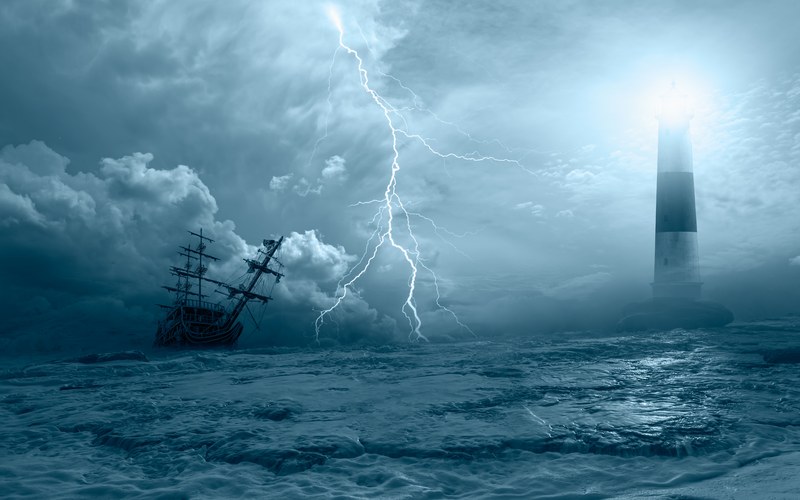
Coastal gothic takes this architecture and puts it at the water's edge. The sea is load-bearing. Fog rolls in and cuts the harbor off from the world. The tides have a rhythm that doesn't care about human plans. The coast creates isolation — physical, social, informational — and isolation is where gothic fiction does its best work.
In romance, this translates to a specific kind of tension. The characters are cut off. The stakes are local and high. The place knows things the reader learns slowly. The dread isn't about monsters; it's about what two people will do to each other, and to themselves, when there's nowhere else to go.
Coastal gothic doesn't require fantasy elements. Some of the best examples are rigorously historical: a smuggling harbor where the economy runs on things that can't be listed in official accounts, a lighthouse keeper's household where the isolation has been doing damage for years, a port town whose prosperity depends on looking away from what moves through it at night.
The spectrum of dark
One useful way to think about dark romance is as a spectrum rather than a category.
At one end: contemporary dark romance with psychological intensity, possessive heroes, and high emotional stakes. The darkness is primarily internal — what the characters are capable of, what they've done, what they want.
Moving along: gothic romance, where the setting participates. The darkness is atmospheric as well as psychological. The place is hostile, or at minimum unhelpful. History is present and pressing. Things that happened before the book started are still happening inside it.
Coastal gothic specifically: often historical, set at the intersection of sea and society. Maritime economies, smuggling networks, lighthouse communities, shipbuilding towns. The danger comes from the sea, from the law, from the people who run what moves through the harbor after dark.
At the far end: romance-horror, femgore, gothic-slasher. The darkness is visceral. The body is involved. The horror elements are literal rather than atmospheric.
None of this is a hierarchy. The question isn't which is more serious or more legitimate — it's which one you want to read tonight. Having language for the spectrum is what makes that answerable.
Why atmosphere outlasts shock
There's a practical reason why atmospheric dark romance tends to have a longer shelf life than shock-based darkness, and it's not a judgment on the shock-based books.
Dread built from place, character, and moral complexity accumulates. Each chapter adds to it. The fog at the start of the book means something different by the end because of everything that happened inside the fog. A book that makes you afraid of a location has done something structural that the payoff can build on. The reader's unease is earned over time, which means the resolution — when it comes — has to pay off all of it.
Shock works differently. A single scene can deliver it, and then it's spent. The book has to keep escalating to maintain the intensity, and escalation has a ceiling. Readers who love femgore and romance-horror often note this themselves: the genre can push into territory that feels like it's chasing rather than building.
Atmospheric gothic has a different failure mode: it can be slow. The setting does a lot of work, and readers who want high plot velocity sometimes find that the fog gets between them and the story. This is a legitimate complaint. The atmospheric dark romances that work best give the setting a job — it's not just mood, it's information — and they don't let it substitute for actual stakes.
The books on this list are the ones that do both.
7 atmospheric and coastal gothic romance books
Rebecca by Daphne du Maurier (1938)
The foundational text. If you love coastal gothic, everything you love about it leads back here. The Cornish coast, a heroine haunted by a woman she never met, a husband whose house has its own logic. Du Maurier invented a lot of the moves this genre still uses: the setting as character, the dread that accumulates before anything overtly terrible happens, the romance that can't be read at face value. If you haven't read it, start here before anything else.
The Essex Serpent by Sarah Perry (2016)
Victorian England. A marsh. A fossil hunter, a vicar, and a rumored serpent that may or may not be eating people. This is atmospheric gothic at its most patient and literary: the setting carries the book, the romance is slow and specific, and the book is genuinely interested in the question of what we make of what frightens us. Not a fast read. A rich one.
Mexican Gothic by Silvia Moreno-Garcia (2020)
The best bridge book on this list between atmospheric gothic and actual horror. A glamorous socialite investigates a crumbling hacienda in 1950s Mexico and discovers something that requires the reader to decide how much horror they can tolerate. The romance is real, the protagonist is a great heroine, and the dread escalates in a way that is earned rather than manufactured. If you're testing where your line is between atmosphere and horror, start here.
Outlander by Diana Gabaldon (1991)
The original atmospheric-historical doorstop. Scotland in the 1740s is not a safe place, and the book doesn't pretend it is. Jamie Fraser is the morally complex hero with genuine blood on his hands and real tenderness for one specific person — the dynamic that readers in 2026 are still describing as what they want, just in different words. The Highlands as setting are gothic in exactly the right way: a place with its own logic that doesn't defer to the characters' plans.
Lord of Scoundrels by Loretta Chase (1995)
The atmospheric element here is social rather than geographical — the gothic quality is in the hero's reputation and what it costs the heroine to ignore it — but this is the book that defined the morally gray historical hero for a generation. Sebastian Dain is dangerous in a way that the society around him takes seriously. The heroine does not take it seriously in the expected ways, and that's the whole story.
A Discovery of Witches by Deborah Harkness (2011)
Oxford libraries, Oxford magic, a slow-burn romance between a witch and a vampire who have both been keeping secrets for different reasons. This is the cerebral, immersive end of gothic romance: long, atmospheric, interested in history and scholarship. The setting shifts, but the opening Oxford sequences are atmospheric gothic done at full throttle.
The Smuggler's Ledger by Remy Fontaine (2025)
1832 Devon coast. A harbor that keeps the town's secrets because its economy depends on them. A woman hired to audit the accounts, and the man who falsified them — who is frightening to everyone who works those docks except, increasingly, her. The stakes are a hanging offense. The darkness comes from the place and the situation: fog, tidal rhythms, the specific moral position of a man who has built his survival on things he can't say out loud. No supernatural elements. The horror is human and structural, which in 1832 is the most dangerous kind.
What connects all of these
Looking at this list, a few things keep appearing: a setting that doesn't cooperate with the characters' plans; a hero whose moral position is genuinely complicated rather than aesthetically rough; stakes that are real enough to shape every conversation the characters have; and a dread that accumulates across the book rather than arriving in single scenes.
None of these books needed body horror to be genuinely dark. What they needed was commitment — to the place, to the complications, to the actual consequences of the situation the characters are in.
That's the version of dark romance this post is about. It's a big category with a long history, and right now, with the genre trending toward gothic aesthetics and atmospheric dread, it's a good moment to be finding your way into it.
If you want to start somewhere: Rebecca if you haven't read it, Mexican Gothic if you want to test your horror line, and the foggy harbor if you want the historical version where the stakes are the law and the dread is real and the slow burn runs for 400 pages and earns every one of them.